Business processes rarely stay efficient forever.
As organisations grow, new customers, employees, products, and systems introduce additional complexity. Processes that once worked well gradually become slower, more difficult to manage, and less effective.
Business process improvement removes unnecessary delays, duplicated effort, and process bottlenecks so your teams can focus on delivering value.


Business process improvement is the systematic practice of evaluating existing business processes to improve their efficiency, effectiveness, and overall performance.
The goal isn’t to redesign everything. It’s to make existing processes faster, simpler, and more effective by removing unnecessary complexity and improving the way work flows throughout the business.
Identify constraints that slow work and reduce productivity.
Reduce duplicated effort, unnecessary approvals, and manual activities.
Help teams accomplish more without increasing resources.
Make processes easier to follow and easier to manage.
Strengthen coordination between departments and improve communication.
Minimise errors, rework, and reliance on individual knowledge.
Ensure information reaches the right people at the right time.
Create processes that continue improving as your business evolves.
Evaluate existing workflows to uncover opportunities for improvement.
Identify operational constraints that slow work and reduce business performance.
Simplify processes by removing unnecessary steps and reducing handoffs.
Reduce manual effort, duplicated work, and unnecessary approvals.
Create consistent ways of working across teams, departments, and locations.
Focus on the changes that will deliver the greatest business value.


If any of these situations sound familiar, business process improvement can help remove inefficiencies, reduce delays, and improve the performance of your existing operations.
Review existing workflows, identify operational constraints, and understand where performance is being lost.

Develop practical improvements that remove bottlenecks, simplify workflows, and improve operational performance.

Embed improvements into everyday operations through documentation, governance, and ongoing review.
By understanding your business before recommending change, we deliver improvements your teams can adopt with confidence and sustain over the long term.
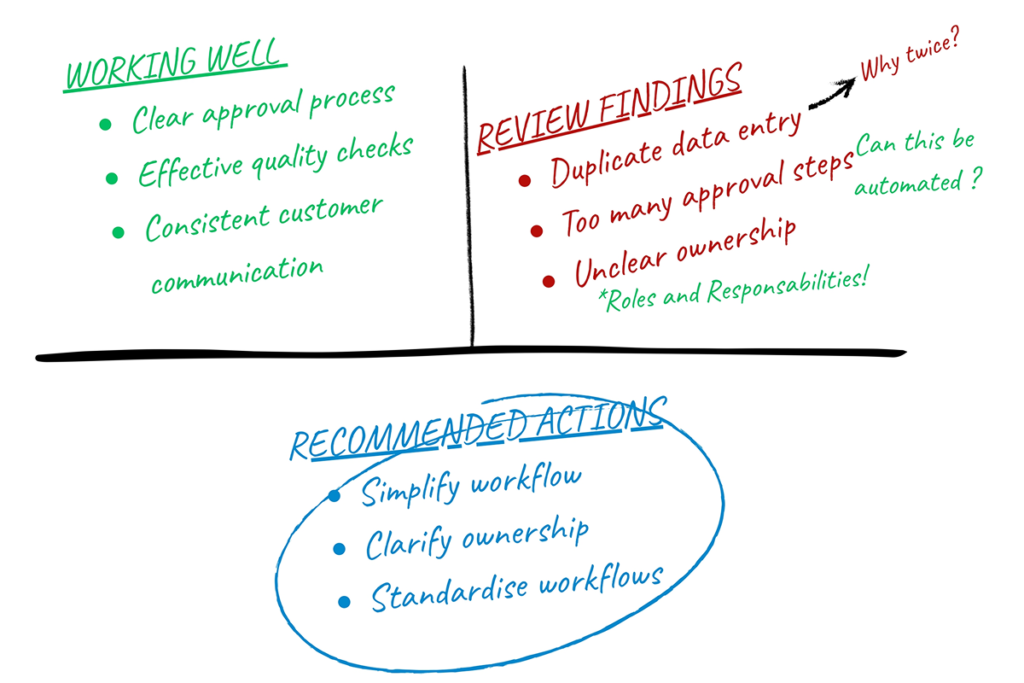
Process reviews bring together the people involved in the work to explore what is working, where problems occur, and what could be improved.
These discussions help uncover the causes of delays, duplicated effort, unclear ownership, and other operational challenges before turning the findings into practical recommendations.
Once improvement opportunities have been identified, we prioritise them according to their operational impact, urgency, and ease of implementation. We then translate the findings into practical recommendations your team can put into action.
Depending on the scope of work, deliverables may include:
The result is a clear, prioritised plan showing what should change, why it matters, and how the improvements can be implemented and measured.
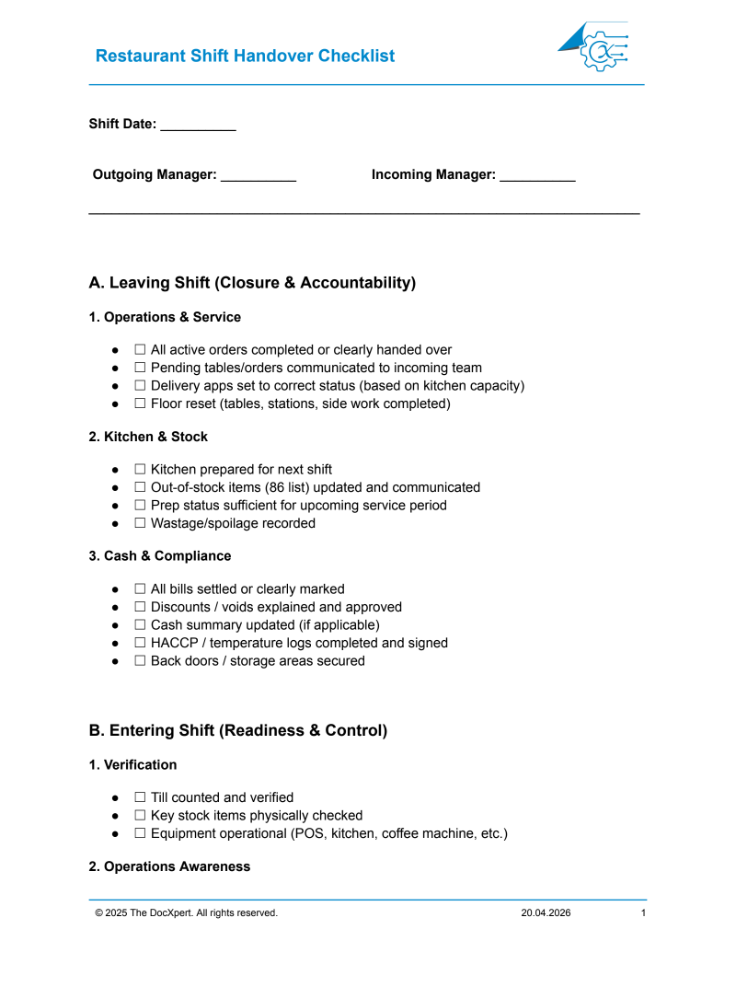
Business process design focuses on creating new or redesigned business processes. Business process improvement focuses on evaluating existing processes, identifying opportunities to improve performance, and implementing practical changes that deliver better operational outcomes.
Yes.
Improving business processes before implementing ERP, CRM, Microsoft 365, or other technology platforms helps ensure technology supports efficient ways of working rather than reinforcing existing inefficiencies.
If your business is becoming harder to manage, it’s time to put the right systems in place.

Take a quick assessment to evaluate your current practices, identify gaps, and receive actionable insights for improving your governance.