


Business Process Design

Design clear business processes that improve consistency and accountability.

Build Better Business Processes

Every business depends on processes.

As organisations grow, informal ways of working become harder to manage. Different teams develop different methods, responsibilities become unclear, and knowledge remains with individuals instead of the business.

Business process design replaces informal ways of working with clear workflows, defined responsibilities, decision points, and operational controls. This helps growing businesses reduce inconsistency, manage operational risk, and scale without becoming increasingly dependent on individual employees.

What is Business Process Design?

Business process design analyses how work flows through an organisation and creates better, more efficient ways of performing that work.

Rather than simply documenting existing activities, it redesigns workflows, responsibilities, and decision points to improve operational performance and deliver consistent business outcomes.

What Every Effective Process Defines

Workflow

Design clear sequences of activities from start to finish.

Decision Points

Define approvals and business rules that guide decision-making.

Inputs & Outputs

Identify what each activity requires and what it produces.

Controls & Governance

Define the approvals, standards, and controls required to support consistent execution and manage operational risk.

Roles & Responsibilities

Clarify ownership and accountability throughout each process.

Information Flow

Ensure the right information reaches the right people at the right time.

Department Handoffs

Improve collaboration between teams and reduce communication gaps.

Continuous Improvement

Create processes that can be reviewed, refined, and improved as the business evolves.

How We Can Help

Whether you’re improving existing operations or designing new business processes, we design structured business processes that strengthen accountability, reduce delays, and support consistent execution.

Business Process Analysis

Evaluate existing workflows, identify operational challenges, and uncover opportunities for improvement.

Future State Process Design

Design business processes that support operational efficiency and sustainable growth.

Process Mapping

Create clear visual process maps that improve understanding, communication, and operational consistency.

Workflow Optimisation

Simplify complex workflows by removing unnecessary steps and reducing bottlenecks.

Roles & Responsibilities

Clearly define ownership, accountability, and decision-making across each process.

Process Documentation

Develop SOPs and supporting documentation for consistent execution.

Is Business Process Design Right for Your Business?

Business process design is most valuable during periods of growth or operational change.

You're Growing

Common Operational Challenges

If any of these situations sound familiar, business process design can help create clearer responsibilities, more consistent execution, and operations that are easier to scale.

Why Our Approach Is Different

We do not begin by turning existing practices into documents. We first evaluate how work is actually performed, identify what is causing delays or inconsistency, and design a better way of working. Documentation is then created to make the improved process clear, repeatable, and easier to maintain.

A Common Process Design Mistake

One of the most common mistakes is documenting a process before deciding whether it works. This can formalise unnecessary steps, unclear responsibilities, and workarounds that should have been removed. Effective process design improves the way work happens before turning it into a standard way of working.

How We Design Better Business Processes

Every engagement follows a structured approach that ensures your business processes are practical, scalable, and aligned with your business objectives.

Evaluate

Review current workflows, identify bottlenecks, and understand how work moves across teams.
Engineer

Design improved workflows, responsibilities, decision points, and operational controls.

Elevate

Embed improved processes into everyday operations.
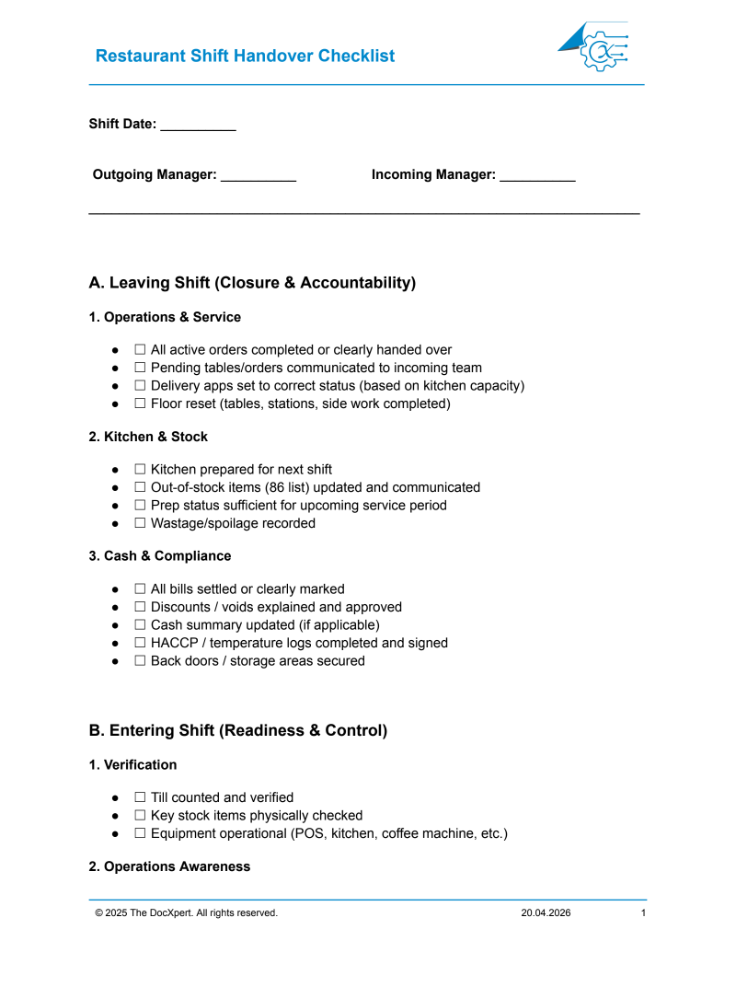
By understanding your business before designing solutions, we create business processes that your teams can confidently follow and continuously improve.

Turning Process Design into Everyday Operations

Every engagement is tailored to your business. Depending on the scope of work, deliverables may include:


✓ Process Flow Diagrams

✓ Operational Checklists

✓ Standard Operating Procedures (SOPs)

✓ Roles & Responsibilities Matrix

✓ Prioritised Process Improvement Recommendations
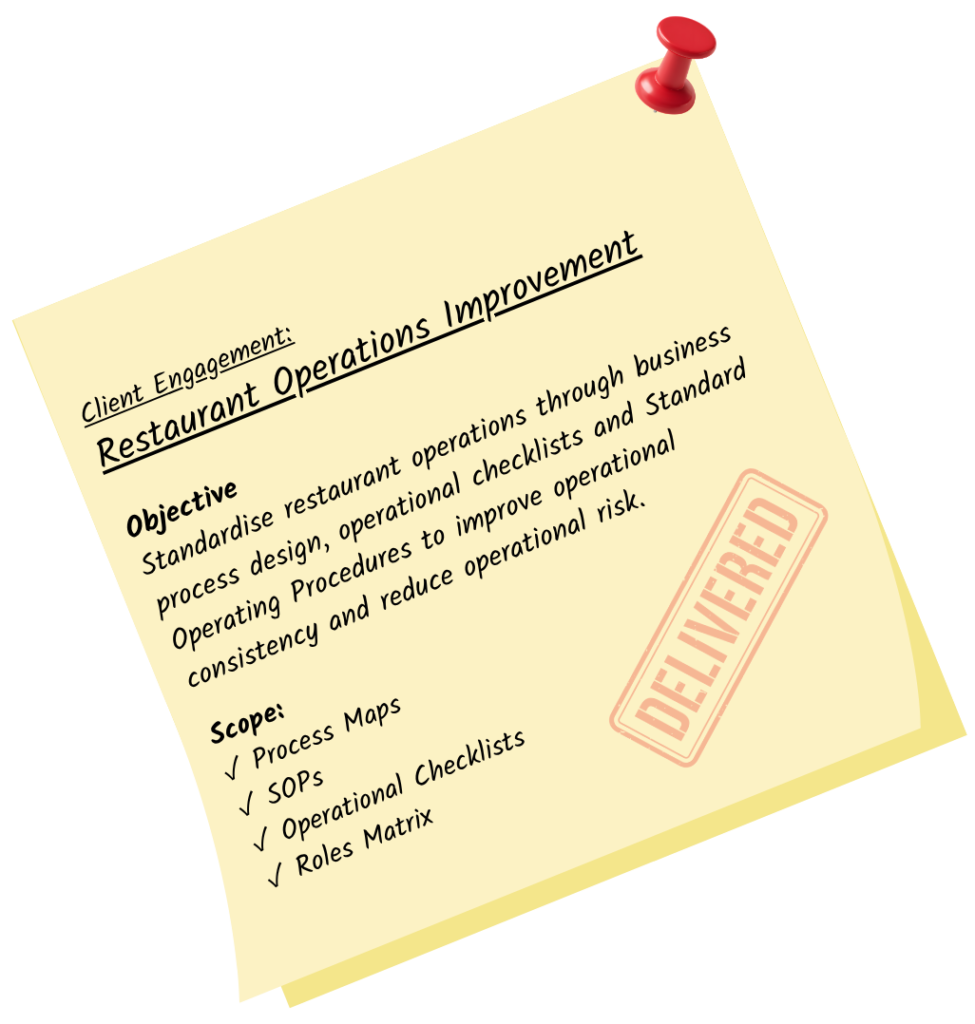
Turning Process Design into Everyday Operations

Every engagement is tailored to your business. Depending on the scope of work, deliverables may include:


✓ Process Flow Diagrams

✓ Operational Checklists

✓ Standard Operating Procedures (SOPs)

✓ Roles & Responsibilities Matrix

✓ Prioritised Process Improvement Recommendations

Based on a real client engagement. Client-specific details have been removed to protect confidentiality.


Frequently Asked Questions

What is the difference between business process design and process mapping?

Process mapping visually documents how work currently happens.


Business process design goes further by analysing existing workflows, identifying opportunities for improvement, and designing better ways of working that align with your business objectives.

No.

Our focus is on designing better business processes first. Documentation is then created to support those improved processes and ensure they can be consistently followed across the organisation.

Yes. Business process design clarifies workflows, responsibilities, approvals, business rules, and information requirements before they are configured in an ERP, CRM, HRMS, Microsoft 365, SharePoint, or other business system. This reduces the risk of automating inefficient or inconsistent ways of working.

We work with growing organisations across a wide range of industries, including professional services, software, hospitality, manufacturing, healthcare, logistics, engineering, and other businesses looking to improve operational consistency.

Depending on your engagement, deliverables may include:

  • Business process maps
  • Workflow diagrams
  • Process documentation
  • Standard Operating Procedures (SOPs)
  • Governance recommendations
  • Roles and responsibility matrices
  • Process improvement recommendations
A business should consider process redesign when teams perform the same work differently, responsibilities are unclear, errors or delays are increasing, or growth is making informal practices difficult to manage. It is also valuable before opening new locations, hiring rapidly, preparing for certification, or implementing business software.

Consider This

Good processes don't slow people down.

They make good work repeatable.

The goal of process design isn’t to add bureaucracy. It’s to remove uncertainty so your team can perform consistently as your business grows.

A 60-minute conversation to improve how your business operates.

We’ll review how work is currently performed across your business, identify process inefficiencies, bottlenecks, and opportunities for improvement, and recommend clear next steps for creating more consistent, efficient, and scalable operations.

Your review includes:

Build Systems That Scale

If your business is becoming harder to manage, it’s time to put the right systems in place.

Assess Your Business Performance​

Take a quick assessment to evaluate your current practices, identify gaps, and receive actionable insights for improving your governance.

Assess the strength, consistency, and effectiveness of your core processes.