



Employee Onboarding

Create onboarding experiences that build confidence from day one.

Set Every New Hire Up for Success

Hiring the right people is an important milestone for any growing business.

But once someone joins your team, the focus shifts from recruitment to helping them become confident, productive contributors.

Without a structured onboarding process, new employees often receive inconsistent training, rely on different colleagues for guidance, and spend valuable time figuring out how work is really done.

Employee onboarding creates a structured, repeatable experience that helps every new employee understand their role, learn your business processes, and become productive with confidence from day one.

What is Employee Onboarding?

Employee onboarding is the structured process of preparing new employees to perform their role successfully.

It combines role expectations, business processes, training, documentation, and practical guidance into a consistent onboarding experience that helps employees integrate into the organisation quickly and confidently.

Effective onboarding doesn’t simply welcome new employees—it equips them with the knowledge, tools, and support they need to contribute consistently and become productive sooner.

What Well-Designed Onboarding Delivers

Faster Productivity

Help new employees become effective sooner by giving them the information and support they need from the start.

Consistent Training

Ensure every employee receives the same onboarding experience, regardless of department or manager.

Greater Confidence

Reduce uncertainty by providing clear expectations, documented processes, and practical guidance.

Reduced Manager Dependency

Answer common questions through structured documentation and onboarding rather than relying on managers to repeat information.

Better Employee Experience

Create a positive first impression that improves engagement, confidence, and long-term retention.

Operational Consistency

Introduce every employee to the same business systems, processes, and standards from day one.

Signs You Need a Better Onboarding Process

  • Every manager trains new employees differently.
  • New hires repeatedly ask the same questions.
  • Employees take longer than expected to become productive.
  • Important knowledge exists only with experienced staff.
  • Training materials are incomplete or outdated.
  • New employees struggle to understand your processes.
  • Critical information is shared verbally instead of being documented.

A Structured Onboarding Journey

A structured onboarding programme helps ensure every employee receives the right information at the right time.

Our Approach

Evaluate

Review your current onboarding process, identify knowledge gaps, and understand how new employees are introduced to your business.

Engineer

Design a structured onboarding system that includes onboarding plans, process documentation, training resources, role-specific guidance, and practical checklists.

Elevate

Continuously improve your onboarding process to support faster productivity, greater consistency, and sustainable business growth.

Who Benefits from Structured Onboarding?

Growing Businesses

Maintain consistency as hiring accelerates and teams expand.

Multi-Location Businesses

Deliver the same onboarding experience across every location.

Founder-Led Businesses

Reduce reliance on founders and experienced employees to train every new hire.

Operations and HR Teams

Create a repeatable onboarding process that supports growth and improves employee readiness.

Frequently Asked Questions

How is employee onboarding different from employee orientation?

Orientation is typically a one-day introduction to the company, workplace, and policies.

Employee onboarding is a structured process that helps new employees understand their role, learn business processes, and become productive over the first few weeks or months.

Yes.

While every employee should receive a consistent introduction to the business, role-specific onboarding ensures they receive the training, documentation, and guidance relevant to their responsibilities.

Yes.

Even small businesses benefit from structured onboarding because it reduces training time, improves consistency, and ensures knowledge isn’t lost when key people are unavailable.

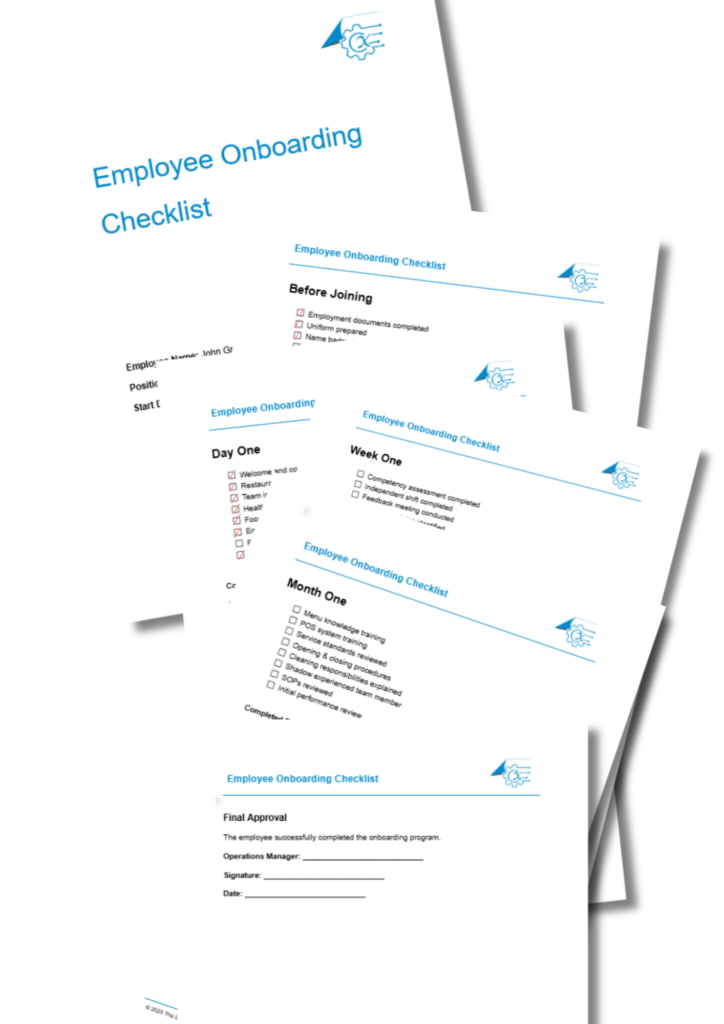
A structured onboarding system may include onboarding plans, role responsibilities, process documentation, SOPs, training materials, checklists, knowledge resources, and scheduled review checkpoints.
While induction often takes place over the first few days, effective onboarding usually continues for 30 to 90 days, allowing employees to develop confidence and competence in their role.

Yes.

We can review your current onboarding process, identify opportunities for improvement, and recommend practical changes without requiring you to start from scratch.

Start Strong

The first few weeks shape how employees perform for years to come.
A structured onboarding process builds confidence early and creates a stronger foundation for long-term success.

Build an Onboarding System That Sets People Up for Success

A 60-minute conversation to evaluate how new employees are introduced to your business.

We’ll review your current onboarding process, identify gaps that slow productivity, and recommend practical improvements to help new employees become confident, productive contributors faster.

Your review includes

Build Systems That Scale

If your business is becoming harder to manage, it’s time to put the right systems in place.

Assess Your Business Performance​

Take a quick assessment to evaluate your current practices, identify gaps, and receive actionable insights for improving your governance.

Assess the strength, consistency, and effectiveness of your core processes.