As software grows, so does the knowledge required to build, maintain, support, and improve it.
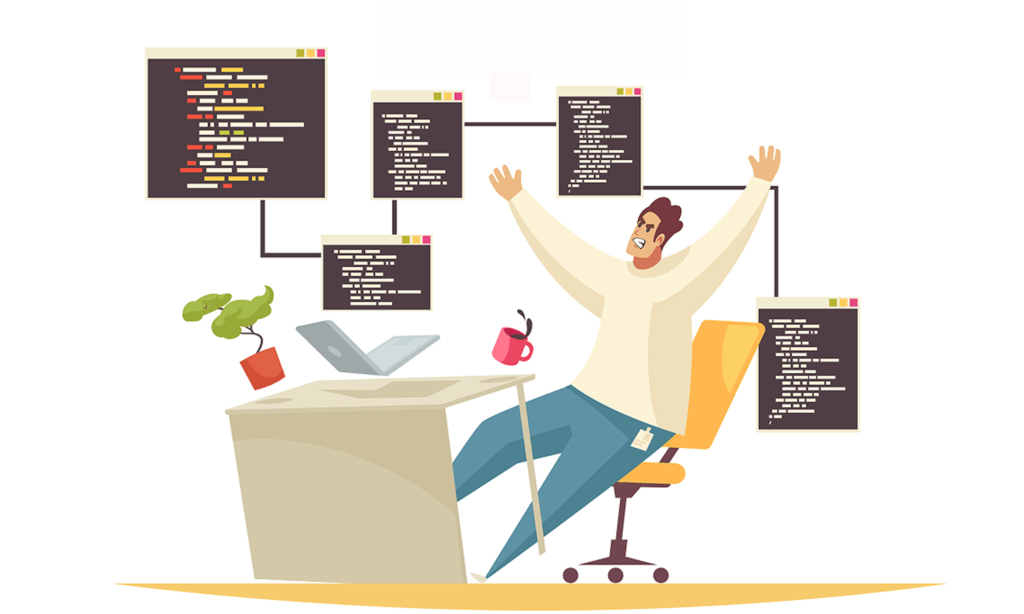
When that knowledge exists only in conversations, tickets, shared drives, or the experience of a few individuals, teams slow down, onboarding becomes harder, and operational risk increases.
Internal technical documentation captures that knowledge, helping technical teams work more consistently, solve problems faster, and support systems with confidence. It’s particularly valuable for organisations with growing engineering teams, complex software platforms, legacy systems, multiple environments, or critical knowledge held by only a few experienced engineers.
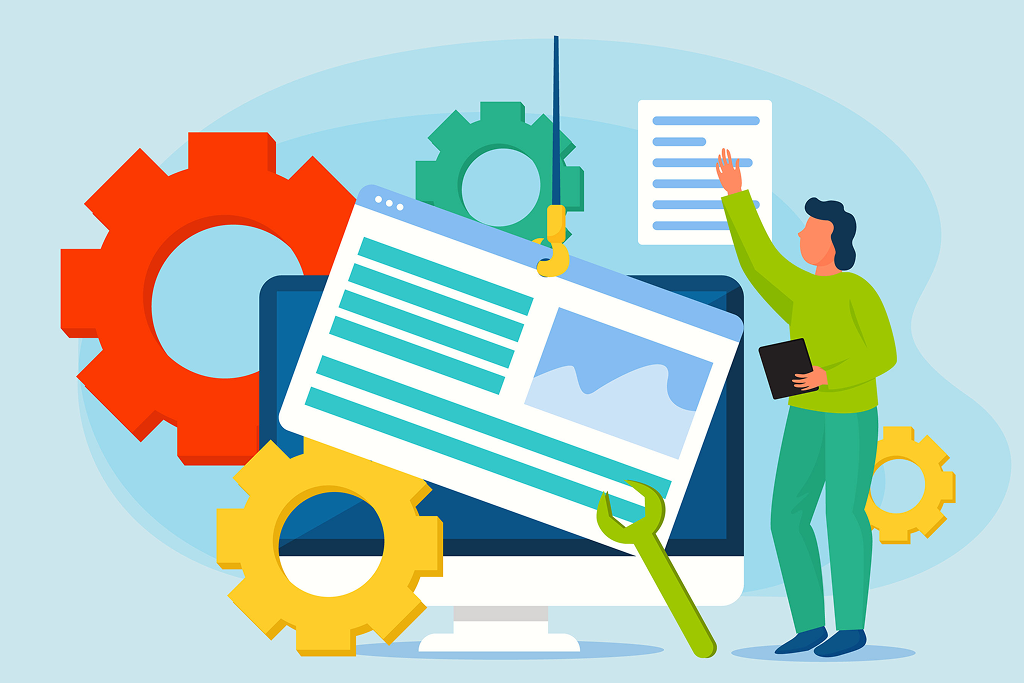
Internal technical documentation captures the technical knowledge your organisation needs to develop, operate, support, and improve software.
Unlike user guides or product documentation, it’s written specifically for internal teams such as developers, solution architects, DevOps engineers, QA teams, IT operations, and technical support.
Rather than simply documenting software, it creates a shared technical knowledge system that preserves expertise, improves collaboration, and supports long-term software maintenance.
Reduce the time it takes for new engineers to become productive with structured technical knowledge.
Capture critical knowledge before it becomes a single point of failure.
Ensure development, operations, and support teams work from the same trusted source of information.
Help engineers diagnose and resolve issues more quickly using documented procedures and troubleshooting guidance.
Make software easier to support, enhance, and scale throughout its lifecycle.
Ensure valuable technical knowledge remains with the organisation—not individuals.
Your organisation may benefit from improving internal technical documentation if:
We create the technical documentation engineering teams rely on to understand systems, support day-to-day operations, preserve technical knowledge, and keep software maintainable as it evolves.
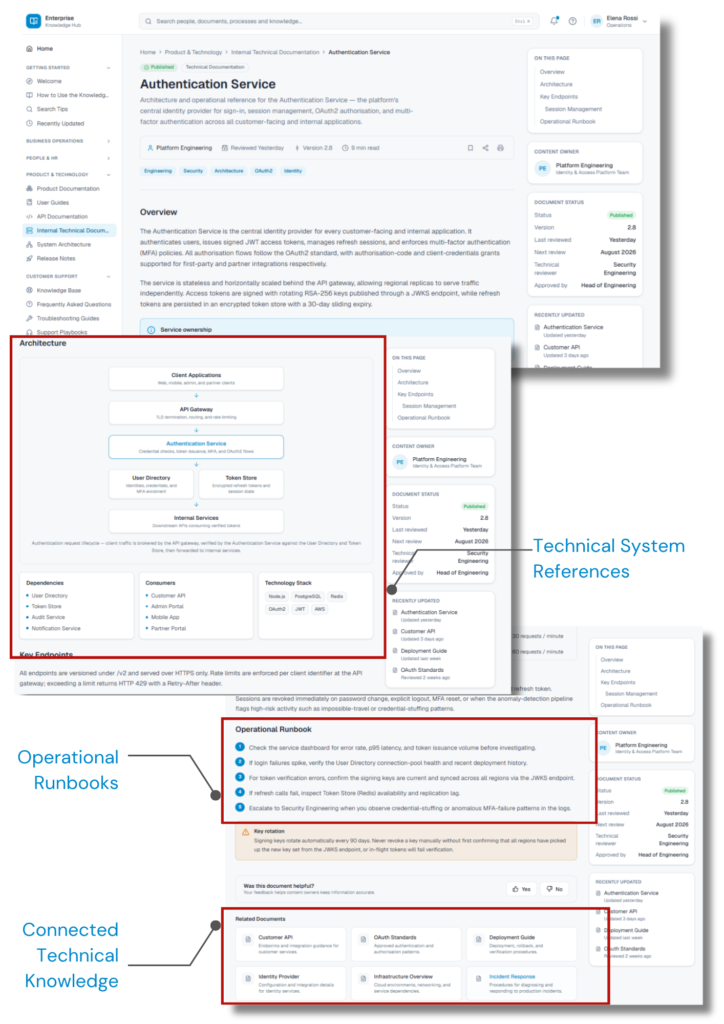
Document software services, components, dependencies, technology stacks, integrations, and system interactions so engineering teams can quickly understand how systems work.
Capture high-level system architecture, component relationships, service interactions, and design principles that support future development and technical decision-making.
Document cloud environments, deployment environments, networking, servers, and supporting infrastructure that keeps your applications running reliably.
Create coding standards, branching strategies, code review practices, testing guidelines, and engineering conventions that promote consistency across development teams.
Provide structured deployment, rollback, verification, release management, and environment promotion procedures that support reliable software delivery.
Document monitoring procedures, routine operational tasks, incident response, backups, disaster recovery, and recovery procedures that help teams respond consistently.
Capture common issues, diagnostic procedures, root causes, known limitations, and recommended resolutions to speed up problem resolution.
Explain how applications, APIs, third-party services, and internal systems exchange information and depend on one another.
Document significant architectural decisions, the reasoning behind them, and the trade-offs considered to support future architectural and engineering decisions.
We create the technical documentation engineering teams rely on to understand systems, support day-to-day operations, preserve technical knowledge, and keep software maintainable as it evolves.
Document cloud environments, deployment environments, networking, servers, and supporting infrastructure that keeps your applications running reliably.
Create coding standards, branching strategies, code review practices, testing guidelines, and engineering conventions that promote consistency across development teams.
We review your existing technical documentation, understand how your software is developed and supported, identify knowledge gaps, and assess how information is currently shared across engineering teams.
We design a consistent documentation framework, organise technical knowledge, create practical documentation, and establish standards that fit the way your teams actually work.

We establish documentation ownership, review processes, governance, and maintenance practices that keep technical knowledge accurate as systems evolve.
The result is more than well-written documentation. It’s a structured technical knowledge system that reduces dependency on key individuals, improves engineering consistency, accelerates onboarding, preserves expertise, and supports long-term software maintenance.
Product documentation helps customers understand and use your software. Internal technical documentation supports the people who build, maintain, deploy, operate, and support it.
Developers, solution architects, DevOps engineers, QA teams, IT operations, support engineers, product managers, engineering managers, and technical leaders all rely on internal technical documentation.
Yes.
We often begin by reviewing existing documentation, identifying gaps, improving structure, and standardising content before creating anything new.
Absolutely. Much of our work involves documenting existing systems that have evolved over time. We work closely with your technical teams to understand the architecture, infrastructure, workflows, integrations, and operational processes before creating clear, structured documentation.
We can work with Confluence, Notion, SharePoint, GitHub Wiki, Azure DevOps Wiki, Markdown repositories, Document360, or your existing documentation platform.
We recommend documentation ownership, review cycles, templates, governance, and maintenance processes that integrate naturally into your existing development workflow.
Yes. Much of the most valuable technical knowledge exists with experienced engineers. We work closely with subject matter experts to capture that knowledge accurately and organise it into documentation that others can easily use.
Absolutely. Legacy systems often present the greatest documentation risk because knowledge has accumulated over many years. We help preserve that knowledge before it’s lost, making future maintenance, onboarding, and modernisation much easier.
Most focused documentation projects are completed within 3–6 weeks, while larger documentation programmes may extend over several months depending on the complexity of your systems.
Yes. Many organisations retain us to ensure internal technical documentation remains aligned with ongoing software development, infrastructure changes, operational improvements, and new system releases.
You’ll receive a prioritised roadmap recommending specific improvements to your internal technical documentation.
From there, you can choose the level of support that suits your organisation:
Every review is confidential, practical, and completely non-binding.
If your business is becoming harder to manage, it’s time to put the right systems in place.

Take a quick assessment to evaluate your current practices, identify gaps, and receive actionable insights for improving your governance.