As organisations grow, documents often spread across shared drives, inboxes, individual devices, collaboration platforms, and disconnected folders.
Employees spend time searching for information, create duplicate files, and work from outdated versions. Approvals become difficult to trace, access permissions become inconsistent, and nobody is entirely certain which document is authoritative.
Document management replaces this uncertainty with a controlled system for creating, classifying, finding, reviewing, approving, retaining, and disposing of business documents.
A 2022 Glean survey conducted by The Harris Poll found that 1,043 US workers spent an average of at least two hours a day looking for the documents, information, or people needed to do their jobs.
The finding reflects the wider cost of fragmented workplace information. Document management addresses the part of that problem caused by poorly structured, duplicated, outdated, or difficult-to-find documents.
Source: Glean, Hybrid Workplace Habits & Hangups, survey conducted by The Harris Poll.


Document management is the structured process of creating, classifying, naming, storing, securing, reviewing, approving, retaining, archiving, and disposing of documents throughout their lifecycle.
A practical document-management framework combines information architecture, document control, ownership, permissions, retention requirements, governance, and supporting technology. The platform stores the documents; the framework determines how they should be managed.
Give employees a clear and consistent way to locate the documents relevant to their work.
Help teams identify the current approved document without relying on filenames, inboxes, or individual memory.
Align document access with roles, responsibilities, confidentiality, and legitimate business need.
Define responsibility for creating, reviewing, approving, maintaining, archiving, and retiring documents.
Maintain approval records, revision histories, retention requirements, and other relevant document controls.
Give teams a shared and controlled working environment that reduces disconnected or conflicting copies.
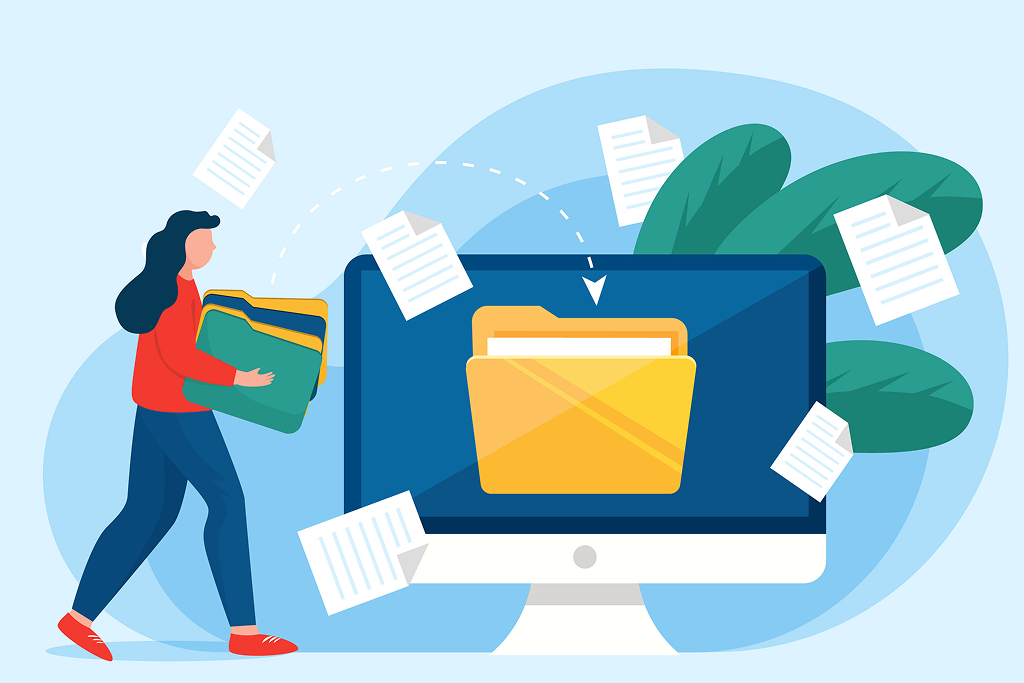
These problems often become more visible during rapid hiring, business expansion, certification, software implementation, or organisational change.
Technology supports the document-management framework, but it does not replace it. Where possible, we improve the structure and governance of your existing platform before recommending a new system.
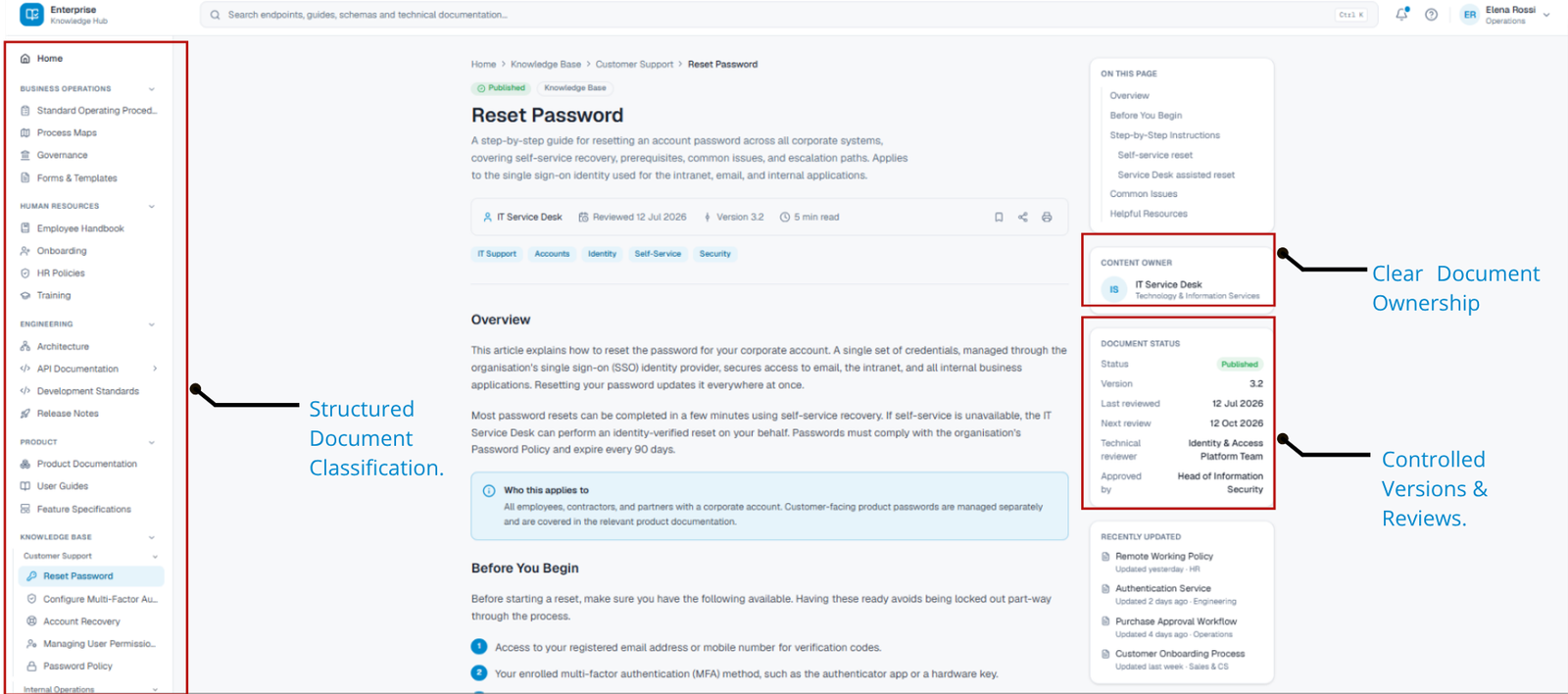
Example of a controlled document environment showing structured classification, clear ownership, version information, review dates, and approval responsibilities.
We assess the current document environment, identify risks and inefficiencies, and establish priorities based on business needs, document sensitivity, and operational impact. Typical duration: approximately 2-3 weeks

We design the future structure, classification, ownership, permissions, document controls, retention requirements, and implementation roadmap. Typical duration: approximately 4-10 weeks, depending on scope

We support implementation, migration planning, adoption, ownership handover, and ongoing governance so the new controls become part of everyday work. Typical duration: approximately 2–3 weeks for initial implementation and handover
No. Cloud storage provides technology for storing, accessing, and sharing files.
Document management defines how those files are classified, named, owned, reviewed, approved, accessed, versioned, retained, archived, and disposed of. Storage provides the location; document management provides the structure and controls governing what happens there.
Document management focuses on formal files and records: how they are stored, classified, controlled, secured, retained, and disposed of throughout their lifecycle.
Knowledge management focuses more broadly on capturing, preserving, sharing, and applying organisational expertise and experience. Documents may support knowledge management, but the two disciplines have different purposes.
Not necessarily. Many organisations can improve document management by restructuring and governing platforms they already use, such as SharePoint, Google Drive, OneDrive, or an existing shared drive.
We assess the current environment, requirements, and limitations before recommending whether configuration changes, restructuring, or new technology should be considered.
Yes. We can assess existing content, identify duplication and obsolete material, design the future structure, define naming and metadata standards, clarify ownership, and develop a controlled migration plan.
This can support the reorganisation of an existing repository or preparation for SharePoint, Microsoft 365, or another document-management platform. Technical migration activities may be completed with your internal IT team or implementation partner where appropriate.
Yes. Structured document control can support ISO management systems, audit readiness, and regulatory requirements through defined ownership, approvals, revision histories, access controls, retention rules, and traceability.
The exact requirements depend on the applicable standard, regulation, document type, and scope. We work with your internal quality, compliance, legal, or specialist advisers where formal interpretation is required.
The timeline depends on the number of departments, document volume, condition of the existing repositories, permission complexity, control requirements, and whether migration is included.
A focused assessment or departmental solution may take approximately 4–8 weeks. A wider programme covering evaluation, framework design, implementation support, and adoption may take approximately 8–16 weeks.
Large programmes involving several departments, significant document volumes, permission redesign, or platform migration may be delivered in phases over a longer period.
You’ll receive prioritised recommendations outlining the most important opportunities to improve structure, control, access, ownership, retention, and maintenance.
From there, you can choose to:
The review does not commit you to a larger engagement.
Yes. Ongoing support can help keep the document-management framework aligned with new document types, organisational changes, revised responsibilities, platform developments, and applicable retention requirements.
Support may include governance reviews, retention-schedule updates, owner guidance, quality checks, structure improvements, and control maintenance.
If your business is becoming harder to manage, it’s time to put the right systems in place.
Take a quick assessment to evaluate your current practices, identify gaps, and receive actionable insights for improving your governance.