As software grows, so does the knowledge required to build, maintain, deploy, operate, and support it.
When that knowledge exists only in conversations, tickets, shared drives, code comments, or the experience of a few engineers, teams become dependent on individuals and important technical context becomes difficult to recover.
Internal technical documentation captures how systems are designed, connected, deployed, operated, and maintained. It gives technical teams a shared reference for understanding the software and making informed changes over time.

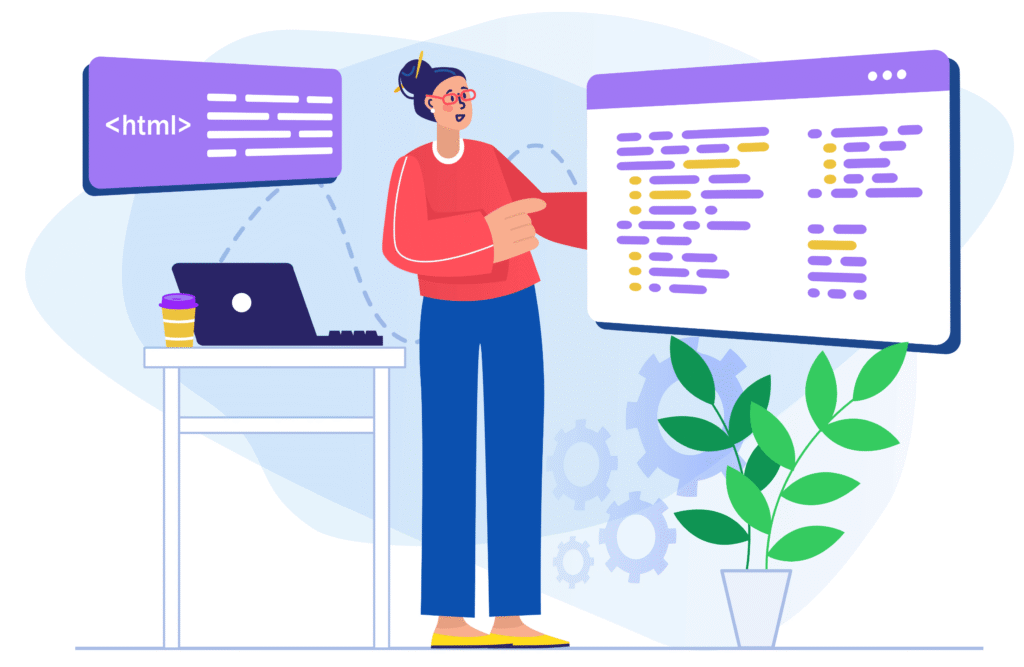
Internal technical documentation is the structured information that helps engineering, architecture, DevOps, QA, IT operations, and technical-support teams understand and work with software systems.
It may describe system architecture, services, infrastructure, integrations, deployment procedures, engineering standards, operational runbooks, troubleshooting guidance, and important technical decisions.
Unlike customer-facing product documentation, it is written for the people responsible for building, operating, maintaining, supporting, and improving the technology.
Give new engineers a clearer path for understanding systems, dependencies, standards, and operating practices.
Capture important technical knowledge so it does not remain dependent on a few experienced employees.
Give development, operations, QA, and support teams access to shared technical standards and guidance.
Provide runbooks, troubleshooting guidance, dependencies, and escalation information during technical incidents.
Make architecture, dependencies, interfaces, constraints, and operational requirements easier to understand.
Preserve important system knowledge when responsibilities change or experienced employees leave.

Services, components, dependencies, technology stacks, integrations, and system interactions
Architecture overviews, component relationships, service interactions, system boundaries, and design principles
Cloud environments, servers, networking, deployment environments, and supporting infrastructure
Coding standards, branching strategies, review practices, testing guidance, and engineering conventions
Deployment, rollback, verification, release-management, and environment-promotion procedures
Monitoring, routine operations, incident response, backups, disaster recovery, and recovery procedures
Common issues, diagnostic procedures, known limitations, and recommended resolutions
Connections between applications, APIs, third-party services, and internal systems
Significant architectural decisions, their rationale, alternatives considered, and relevant trade-offs
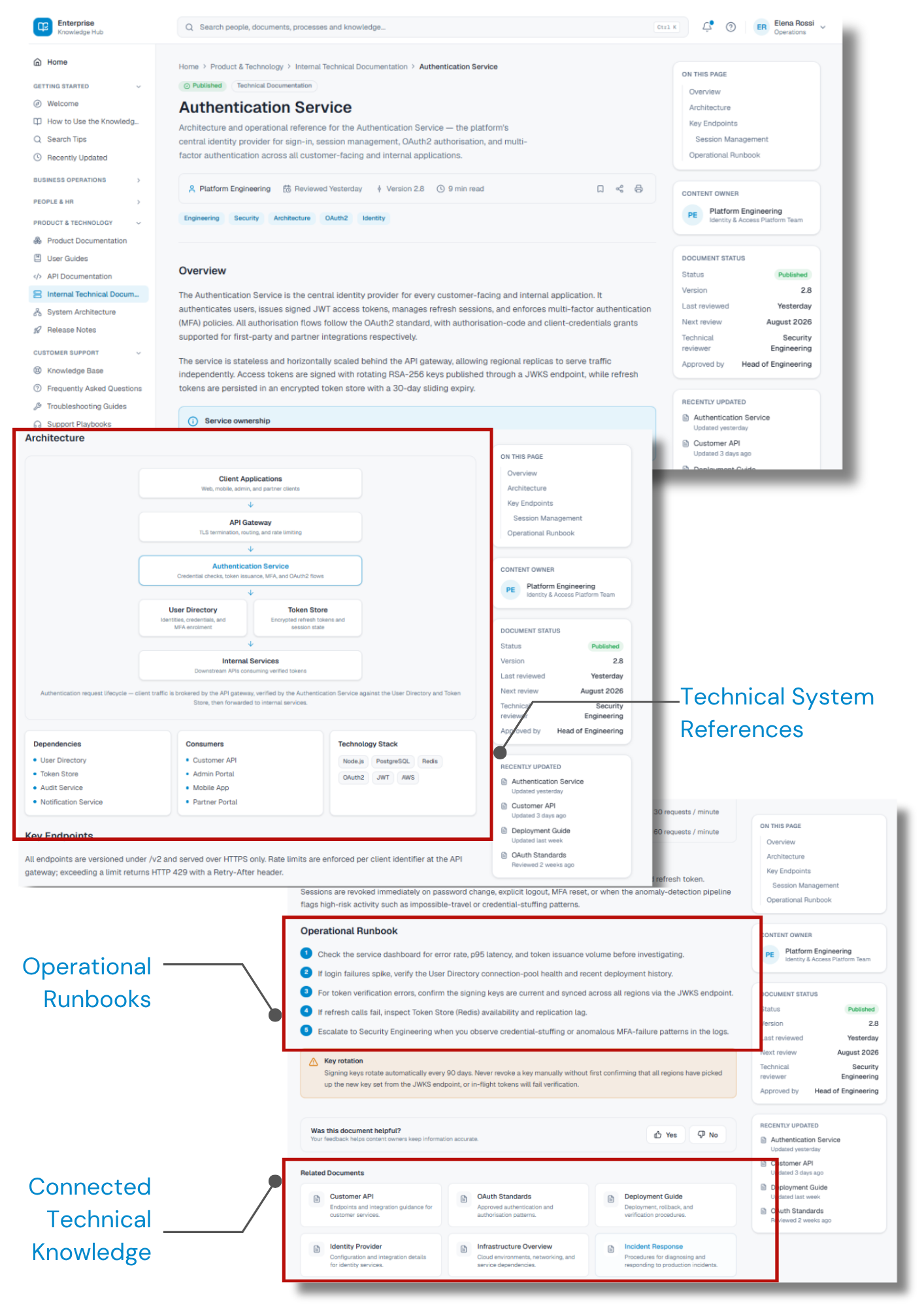
Example of connected internal technical documentation combining system architecture, operational runbooks, ownership, review information, and related technical resources.
We review your systems, existing documentation, technical workflows, information sources, and team dependencies to identify important knowledge gaps and unreliable content.
We organise technical knowledge and create practical documentation using consistent structures, templates, terminology, diagrams, and standards suited to your engineering environment.

We establish ownership, review points, change triggers, and maintenance practices that help keep technical documentation aligned with system changes.
The result is a structured technical knowledge system that connects architecture, operations, engineering practices, and supporting technical information.
Internal technical documentation may be used by developers, solution architects, DevOps and platform engineers, QA teams, IT operations, support engineers, product managers, engineering managers, security teams, and technical leaders.
The intended audience determines the subject matter, terminology, structure, and level of technical detail.
Yes. We can review your existing documentation, identify gaps and duplication, improve its structure, standardise terminology and templates, and update content that is incomplete or no longer reliable.
New documentation is created only where the required information is missing or the existing content cannot be improved effectively.
Yes. We can document existing systems, including software that has evolved over time or changed ownership.
We work with available technical sources and subject-matter experts to understand the architecture, infrastructure, services, integrations, workflows, and operational procedures. The resulting documentation is validated by the relevant technical reviewers.
We can structure content for platforms such as Confluence, Notion, SharePoint, GitHub Wiki, Azure DevOps Wiki, Markdown repositories, Document360, and other documentation or knowledge-management systems.
The approach depends on your existing platform, access arrangements, publishing workflow, version-control requirements, and technical constraints.
We establish clear ownership, review cycles, templates, content standards, and change triggers that fit into the existing development and operational workflow.
Documentation may need review when architecture, code, infrastructure, integrations, deployment procedures, security requirements, or support practices change.
Yes. Important technical knowledge often sits with experienced engineers and other subject-matter experts.
We use structured interviews, technical walkthroughs, demonstrations, and existing source material to capture that knowledge. Drafts are then reviewed with the appropriate technical specialists to confirm accuracy.
Yes. Legacy systems often carry increased documentation risk because knowledge has accumulated over many years and may depend on a small number of experienced employees.
We can help document system architecture, dependencies, integrations, operating procedures, known limitations, and technical decisions to support maintenance, knowledge transfer, or future modernisation.
The timeline depends on the number and complexity of the systems, condition of the existing documentation, required deliverables, availability of subject-matter experts, and technical review process.
A focused documentation project may take approximately 3–6 weeks. A larger programme covering multiple systems, teams, or documentation types may be delivered in phases over several months.
During the Internal Technical Documentation Review, we’ll recommend a realistic scope, sequence, and timeline.
Yes. Ongoing support can help keep internal technical documentation aligned with software releases, infrastructure changes, new integrations, operational improvements, and architectural decisions.
Support may include documentation updates, new technical content, quality reviews, standards maintenance, information-architecture improvements, and coordination with technical content owners.
You’ll receive prioritised recommendations outlining the most important improvements to your internal technical documentation.
From there, you can choose the level of support that best suits your organisation. We can:
The review does not commit you to a larger engagement.
If your business is becoming harder to manage, it’s time to put the right systems in place.
Take a quick assessment to evaluate your current practices, identify gaps, and receive actionable insights for improving your governance.