Process Mapping

Visualise business processes to identify opportunities for improvement.

Understand How Work Really Flows

As businesses grow, it becomes harder to see how work actually moves through the organisation.

Tasks pass between people, departments, and systems. Different teams develop different ways of working, responsibilities become less clear, and inefficiencies often remain hidden within day-to-day operations.

Process mapping makes work visible.

By creating a clear picture of how activities, decisions, responsibilities, and information flow across your business, process mapping makes it easier to identify bottlenecks, understand handoffs, and make informed operational decisions.

A Process Map Should Reflect Reality

A useful process map shows how work is actually performed – not simply how a policy or procedure says it should happen. Speaking with the people involved often reveals workarounds, informal approvals, repeated steps, and handoffs that are not visible in existing documentation.

What is Process Mapping?

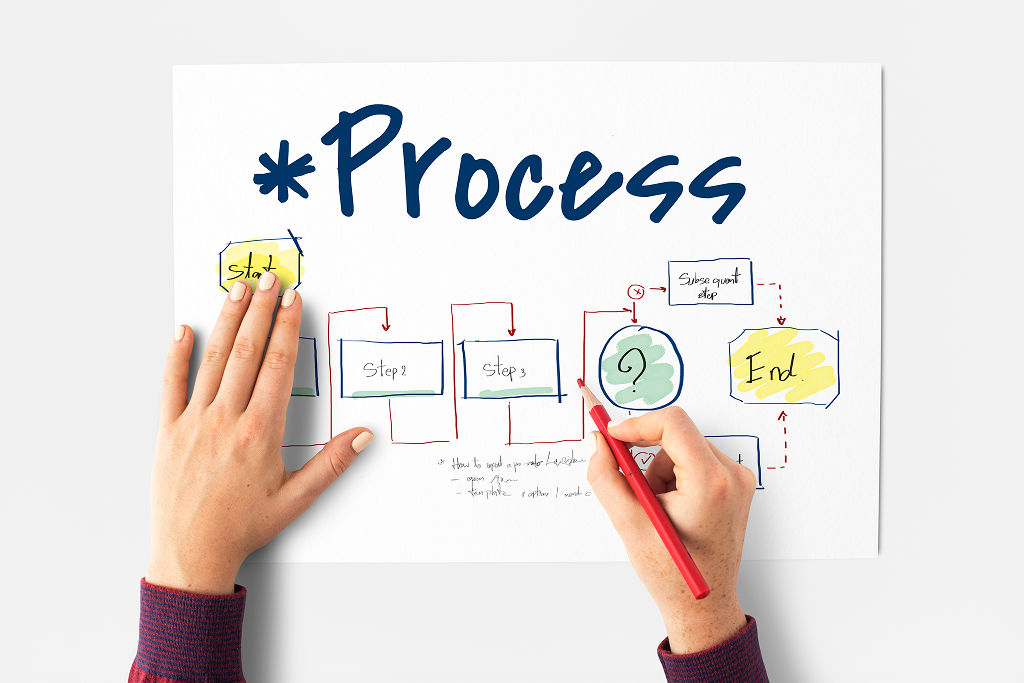
Process mapping is the practice of visually documenting how work moves through a business.

It shows the sequence of activities, decision points, responsibilities, and information flows that make up a business process.

Instead of relying on written descriptions or individual knowledge, process maps provide a clear visual representation of how work is actually performed, giving everyone a shared understanding of the process.

What You'll Learn from Process Mapping

Workflow

Understand how work moves from one activity to the next.

Responsibilities

Clarify ownership, accountability, and decision-making.

Decision Points

Identify approvals, exceptions, and business rules that influence the process.

Handoffs

See where work moves between people, teams, or departments.

Information Flow

Understand how information is created, shared, and used throughout the process.

Improvement Opportunities

Highlight potential bottlenecks, duplicated activities, and areas that may benefit from further review, simplification, or standardisation.

Our Approach to Process Mapping

We combine stakeholder discussions, existing documentation, and direct observation to build an accurate view of how work moves across people, departments, and systems.

Evaluate

Understand how work is currently performed by speaking with stakeholders, reviewing existing information, and observing how processes operate.

Engineer

Create clear visual process maps that accurately represent workflows, responsibilities, decision points, and information flows.

Elevate

Identify opportunities to improve consistency, reduce inefficiencies, and support future process design, documentation, or technology initiatives.

What You'll Receive

Depending on your requirements, your engagement may include:

Current-state process maps

Cross-functional workflow diagrams

Swimlane process maps

Roles and responsibilities mapping

Process observations and findings

Improvement recommendations

What You'll Receive

Depending on your requirements, your engagement may include:

Current-state process maps

Cross-functional workflow diagrams

Swimlane process maps

Roles and responsibilities mapping

Process observations and findings

Improvement recommendations

When Process Mapping Is Valuable

Process mapping is particularly valuable when your business is growing or operational challenges make it difficult to see how work really flows.

You're Growing

Common operational challenges

Frequently Asked Questions

What's the difference between Process Mapping and Process Design?
Process mapping focuses on understanding and visualising how work currently flows. Process design builds on that understanding to create more efficient, consistent, and scalable ways of working.

Yes.

Understanding current workflows before implementing new technology helps ensure business systems reflect how your organisation actually operates, reducing implementation risks and improving user adoption.

Depending on your requirements, we create workflow diagrams, swimlane diagrams, cross-functional process maps, SIPOC diagrams, and value stream maps.

We typically begin by mapping your current processes. Where the engagement also includes process design or process improvement, we can develop future-state process maps that illustrate improved ways of working.
Yes. Any business experiencing growth or increasing operational complexity can benefit from understanding how work flows before making improvements.

Before You Improve

You can't improve what you don't fully understand.

Understanding how work really flows gives your team the clarity to make better decisions, improve processes with confidence, and build stronger business systems.

A 60-minute conversation to improve how your business operates.

We’ll review how work currently flows across your business, identify process inefficiencies, bottlenecks, and opportunities for improvement, and recommend practical next steps for creating more consistent, efficient, and scalable operations.

Your review includes

Build Systems That Scale

If your business is becoming harder to manage, it’s time to put the right systems in place.

Assess Your Business Performance​

Take a quick assessment to evaluate your current practices, identify gaps, and receive actionable insights for improving your governance.

Assess the strength, consistency, and effectiveness of your core processes.