



Employee Onboarding

Create onboarding experiences that build confidence from day one.

Help Every New Employee Start with Clarity

Hiring the right people is only the beginning. New employees also need to understand their role, how work is carried out, where to find information, and who to approach when they need support.

Without a structured onboarding process, guidance can vary depending on the manager or colleague providing it. Important knowledge may be missed, expectations remain unclear, and new employees spend unnecessary time working out how the business operates.

A well-designed onboarding system creates a consistent path from joining the organisation to performing the role with growing confidence and independence.

What is Employee Onboarding?

Employee onboarding is the structured process of helping new employees understand the organisation, learn their responsibilities, and develop the knowledge and capability required to perform their role.

It brings together role expectations, business processes, training, documentation, practical activities, and review points within a planned journey.

Unlike a one-day orientation, onboarding continues beyond the employee’s introduction to the workplace. It provides guidance and support as they gradually take ownership of their responsibilities.

What Well-Designed Onboarding Delivers

Clearer Role Readiness

Give new employees the information, guidance, and practical experience needed to take on their responsibilities.

Consistent Foundations

Ensure every employee receives the essential information and guidance required by the organisation, while allowing for role-specific needs.

Greater Confidence

Reduce uncertainty through clear expectations, accessible information, and practical guidance.

Less Repeated Explanation

Make essential information easier to access instead of relying on managers and experienced employees to explain the same things repeatedly.

A More Supportive Experience

Give new employees a clear sense of what to expect, where to find support, and how their role contributes to the business.

Operational Consistency

Introduce employees to the processes, systems, responsibilities, and standards relevant to their role.

Signs You Need a Better Onboarding Process

  • Every manager trains new employees differently.
  • New hires repeatedly ask the same questions.
  • Employees take longer than expected to become productive.
  • Important knowledge exists only with experienced staff.
  • Training materials are incomplete or outdated.
  • New employees struggle to understand your processes.
  • Critical information is shared verbally instead of being documented.

A Structured Onboarding Journey

A structured onboarding programme helps ensure every employee receives the right information at the right time.

When Structured Onboarding Is Valuable

Your organisation may benefit from a more structured onboarding system when:

Growing or Changing

  • Recruitment is increasing.
  • New teams, roles, or locations are being introduced.
  • Managers are taking responsibility for onboarding for the first time.
  • The business is implementing new systems or standardising operations.

Onboarding Challenges

  • Managers train new employees differently.
  • New employees repeatedly ask the same questions.
  • Important knowledge remains with experienced employees.
  • Training materials are incomplete, outdated, or difficult to find.
  • Role expectations and responsibilities are unclear.
  • Employees take longer than expected to work independently.
  • Critical information is shared verbally instead of being documented.

Our Approach

Evaluate

We review how employees are currently onboarded, what they need to learn, where information comes from, and where gaps or inconsistencies affect role readiness.

Engineer

We design a structured onboarding journey that combines organisation-wide information with role-specific responsibilities, processes, training, resources, and practical activities.

Elevate

We establish ownership, feedback points, and review mechanisms so the onboarding system remains current as roles, processes, and business requirements change.


What You’ll Receive

Depending on the role, organisation, and scope of the engagement, your onboarding system may include:

  • Onboarding Framework
  • Organisation-wide Onboarding Plan
  • Role-specific Onboarding Plans
  • Roles and Responsibilities
  • Process and SOP References
  • Training Materials and Knowledge Resources
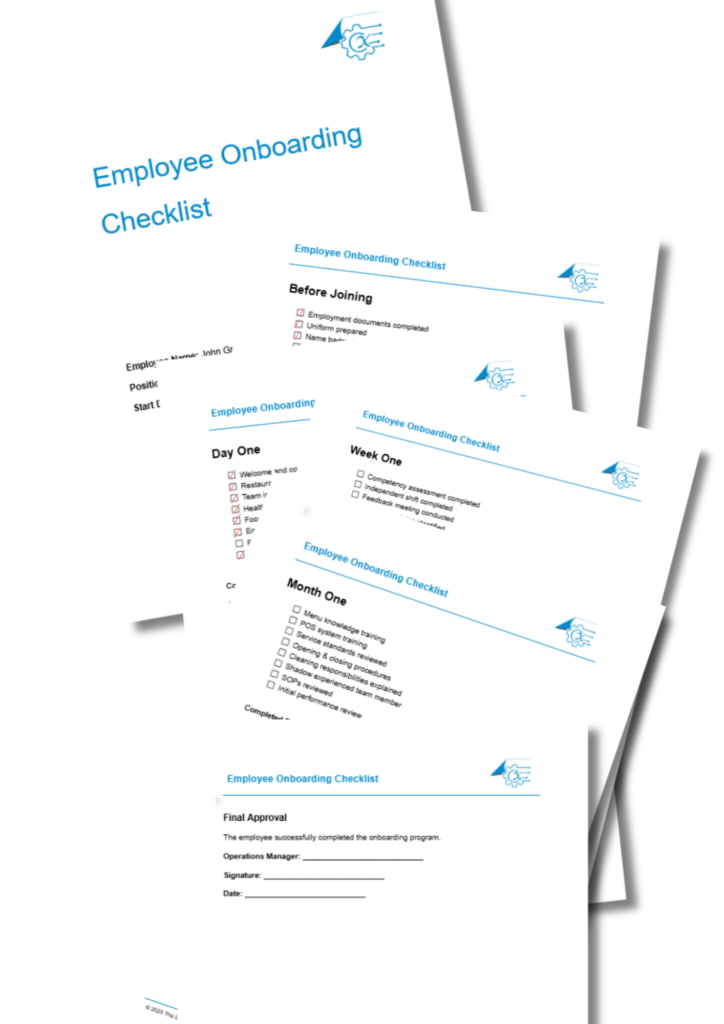
  • New-Employee Checklists
  • Manager and Buddy Checklists
  • 30-, 60-, and 90-day Review Points
  • Feedback and Improvement Mechanisms

Together, these elements create a practical onboarding system that clarifies what each employee needs to learn, when they need to learn it, and who is responsible for supporting them.

Who Benefits from Structured Onboarding?

Growing Businesses

Maintain consistency as hiring accelerates and teams expand.

Multi-Location Businesses

Deliver the same onboarding experience across every location.

Founder-Led Businesses

Reduce reliance on founders and experienced employees to train every new hire.

Operations and HR Teams

Create a repeatable onboarding process that supports growth and improves employee readiness.

Frequently Asked Questions

How is employee onboarding different from employee orientation?
Orientation is usually a short introduction to the organisation, workplace, policies, and immediate practical requirements. Onboarding is a broader process that helps new employees understand their role, learn relevant processes and systems, and gradually take ownership of their responsibilities over the following weeks or months.

Yes.

Employees should receive a consistent introduction to the organisation, but the role-specific part of onboarding should reflect their responsibilities, processes, systems, required knowledge, and level of authority.

Yes.

A formal onboarding process does not need to be complicated. Even a small business can benefit from a clear plan that explains what new employees need to learn, who will support them, and where essential information can be found.

A structured onboarding system may include organisation-wide and role-specific plans, responsibilities, process and SOP references, training materials, checklists, knowledge resources, practical activities, and scheduled review points.
The appropriate length depends on the role and its complexity. Orientation may take place during the first few days, while structured onboarding commonly continues for 30 to 90 days. Roles requiring specialist knowledge, regulatory training, or complex systems may need a longer period.

Yes.

We can review your existing onboarding process, materials, responsibilities, and feedback, then improve the areas that are unclear, inconsistent, outdated, or missing. You do not need to replace everything or start again.

Start Strong

The first few weeks shape how employees understand their role and the business around them.

A structured onboarding process replaces guesswork with clear expectations, accessible knowledge, and practical support.

Build an Onboarding System That Gives People a Clear Start

A 60-minute conversation to review how new employees learn their roles and become ready to work independently.

We’ll review your current onboarding process, identify gaps in responsibilities, training, documentation, and support, and recommend practical improvements that make the experience clearer and more consistent.

Your review includes

Build Systems That Scale

If your business is becoming harder to manage, it’s time to put the right systems in place.

Assess Your Business Performance​

Take a quick assessment to evaluate your current practices, identify gaps, and receive actionable insights for improving your governance.

Assess the strength, consistency, and effectiveness of your core processes.