Hospitality Operations Documentation: Why It Matters More Than You Think
I have always been interested in the quiet systems that hold creative, human work together. In hospitality, those systems are often invisible until they fail. Documentation sits right in that space. It is rarely celebrated, often avoided, and yet it quietly shapes whether a workplace feels chaotic or held.
Many hospitality businesses resist documenting their operations because it feels reductive, as though writing things down might drain the soul from the work. But documentation does not replace human judgment or warmth. It simply creates a shared understanding of how things tend to be done, which frees people to focus on guests rather than on guessing expectations.
Strong hospitality operations documentation creates shared clarity without stripping away the human elements that make service meaningful.
Why Hospitality Operations Documentation Matters
The mistake is usually not documenting at all, or documenting for the wrong audience. Operational documents are often written upward, shaped by compliance, branding, or managerial language, rather than written for the people who actually rely on them mid shift. When documentation speaks in abstract terms or polished slogans, it fails at the exact moment it is needed.
Good operational documentation assumes intelligence and goodwill. It does not over explain, but it does offer context where it matters. Explaining why a process exists helps people make better decisions when circumstances change, which they always do in hospitality. Clear reasoning builds trust in a way that rigid instruction never does.
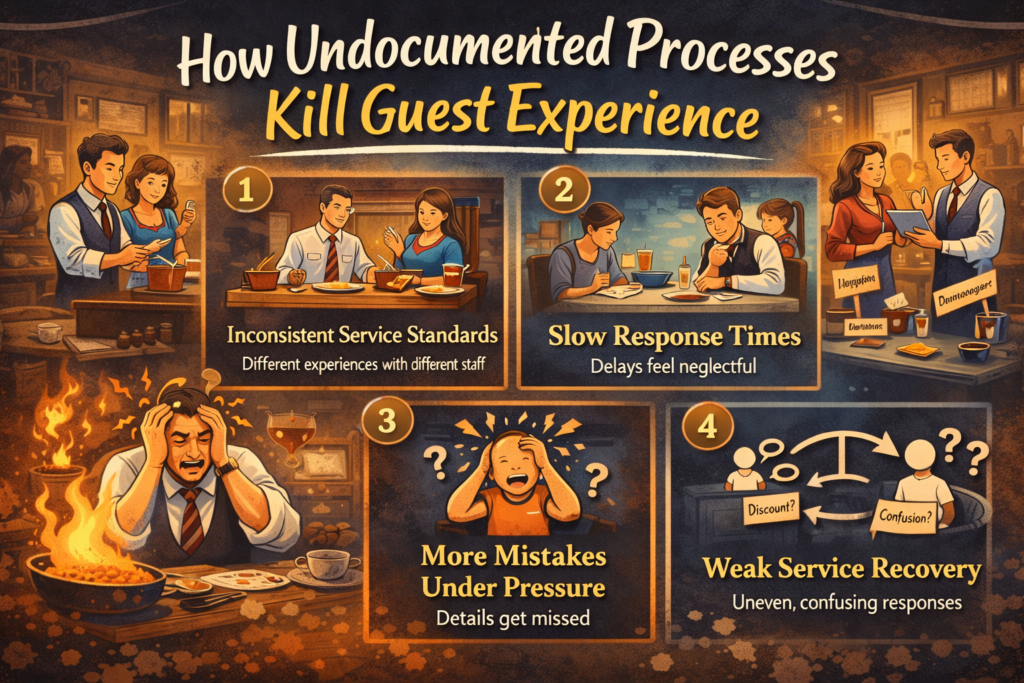
Consider a simple but high impact example like handling early check in requests at a hotel. Many teams rely on verbal knowledge or habit here, which leads to inconsistent guest experiences and unnecessary stress at the front desk. A useful document would not just list steps, but briefly explain the logic behind them. It might clarify how room availability, housekeeping schedules, and occupancy targets influence the decision, and outline a few common scenarios with suggested responses. When staff understand the thinking behind the policy, they can adapt confidently when a guest arrives early on a busy day rather than feeling trapped between pleasing the guest and breaking an unspoken rule.
Writing Documentation for the People Who Use It
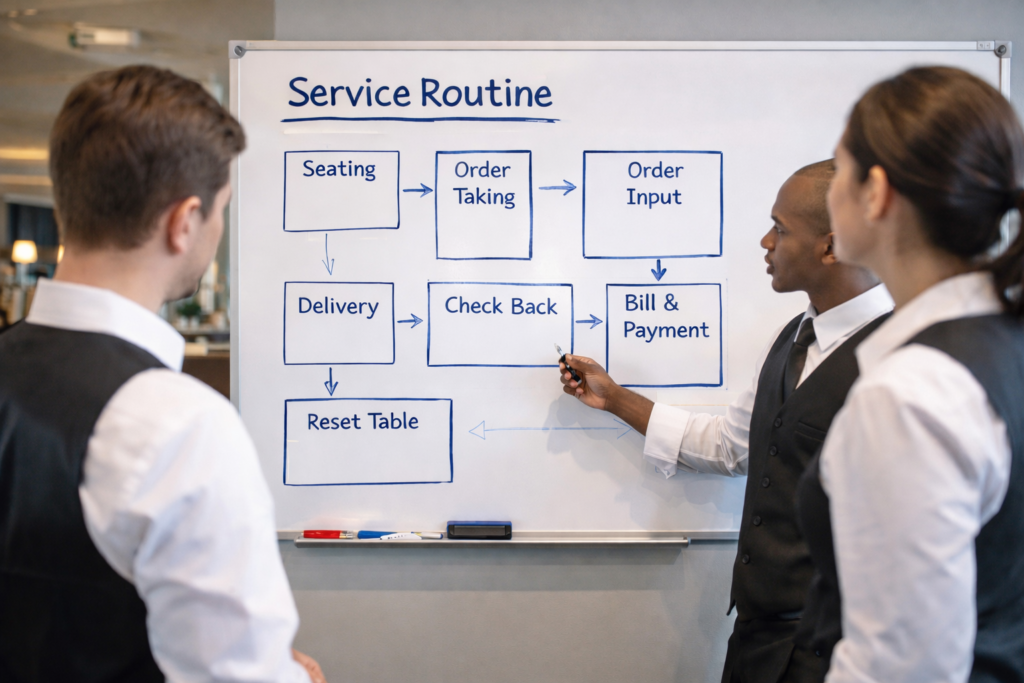
Structure matters more than polish. Documents should be easy to navigate, broken into coherent sections, and written in language that mirrors how people actually speak to one another at work. Long narratives are less useful than clear flows, but overly fragmented instructions are just as unhelpful. The goal is readability under pressure, not aesthetic perfection.
It is also important to document reality rather than ideals. Hospitality work lives in edge cases. Systems break, guests arrive early, suppliers fail, and staff adapt constantly. Documentation that only describes best case scenarios quickly loses credibility. Acknowledging exceptions and decision points makes the material more useful and more honest.
The most effective documentation is rarely written alone. Teams already carry enormous procedural knowledge, and involving them in capturing it improves accuracy while signalling respect. When people see their lived experience reflected in written processes, documentation stops feeling imposed and starts feeling supportive.
Effective hospitality documentation typically includes a clear purpose, practical guidance where necessary, defined decision points, and ownership for updates. Without these elements, even well written documents lose relevance over time.
Making Hospitality Documentation Sustainable
Accessibility and maintenance are what determine whether documentation has any lasting value. If it is hard to find, hard to update, or visibly outdated, it becomes noise rather than guidance. Living documents require ownership, regular review, and transparency around changes; otherwise, they quietly erode trust.
At its best, documenting hospitality operations is not an administrative task but a cultural one. It is a way to reduce unnecessary friction, conserve energy, and make work more sustainable for the people who do it every day. When expectations are clear, people have more space to bring presence, creativity, and care to the moments that actually matter.